Elheme
February 2024 — Prishtinë, Kosova
Albanian:
Mu dokke vetja sikur po eci nëpër njerëz t’vdekun, kta as t’gjallë as t’vdekun
I felt like I was walking among dead people, but these were neither alive nor dead.
Below is the creative, non-fiction vignette written by Erjona Gashi about Elheme’s interview.
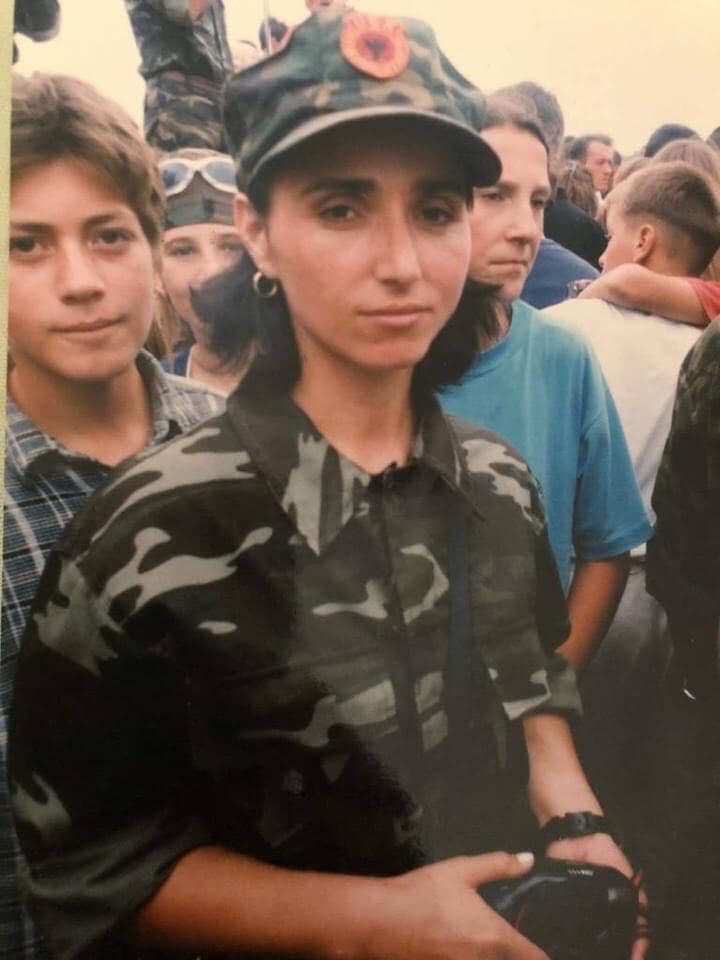
Elheme had always known she would fight. The war loomed like an unspoken promise, and she was not one to wait for fate to decide her role in it. When the Kosovo Liberation Army arrived at her home in Xhubrel, seeking shelter, she saw her chance.
She cooked for them, fed their hunger.
“Teach me to hold a gun,” she demanded. They laughed at first, dismissed her with wary glances, but she was relentless. After days of pleading, pressing, proving herself, they surrendered. They handed her a KLA uniform. She was one of them now.
But war does not give what it takes.
Elheme:
When the war ended, I was sent back to my brigade, back to Buroje, back to the land that had survived me. And on the 18th of June, I went home. I expected to find it as I had left it. Even knowing what had happened in Izbica, even hearing the numbers, the stories—my mind refused to imagine it. I walked into Xhubrel, expecting familiarity, expecting something still standing.
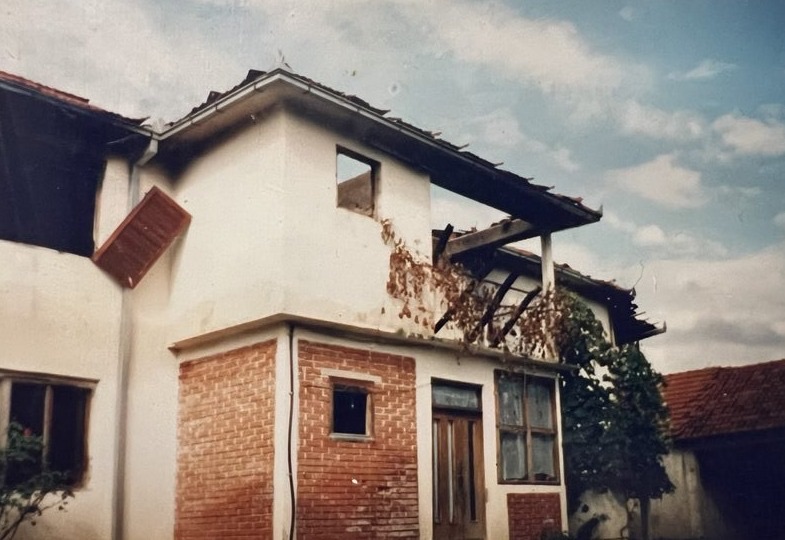
Instead, I found a graveyard. The village was unrecognizable. The air was thick with the scent of charred wood, of something worse. They had burned everything—houses, tractors, people.
Then, through the wreckage, I saw a man. My cousin Beqë.
He walked toward me slowly, hesitantly. His hands were rough, caked in soot and grime, as if he had clawed his way through the ruins for years. His clothes hung loose on his body, his face hollowed by something deeper than exhaustion. His eyes—empty. As if whatever soul had once lived inside him had abandoned him, fled alongside those who had escaped.
Where were the others? Where were the families that once filled these homes with laughter, with noise, with life? My mind refused to accept what my eyes were seeing—burned-out shells of houses, empty doorways. They couldn’t all be gone. They had to be here. I asked him again.
“Where is everyone?”
His voice was distant, detached. “Not here.”
“But where?” I asked.
“They’re in Albania,” he murmured. “They escaped too.”
Then, his voice cracked.
“And they massacred this family… and this family… and this family…”
His hands trembled as he gestured toward the houses.
Everything was gone. Everyone was gone.



 Zëri i Grave