Buqe
March 2021 — Remote

Albanian:
“Policia kanë qenë të stacionum aty edhe na kane marrë kjo pjesa knej e Deçanit n’telefon, ikni se jon ra deri poshtë policia tash ju hijne nëpër shpija.”
“The police was stationed there and the people on the other side of Decan called us, they said we should flee before the police finds us.”
Below is the a creative, non-fiction vignette written by Erjona Gashi about Buqe’s interview.
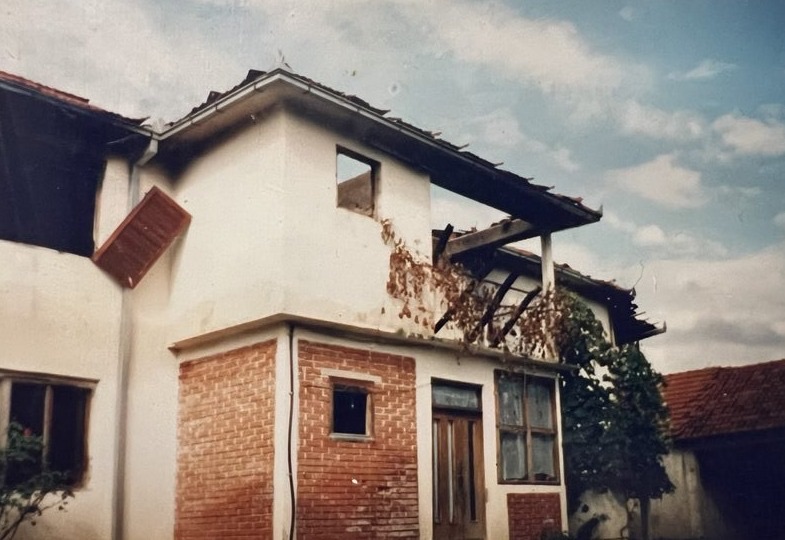
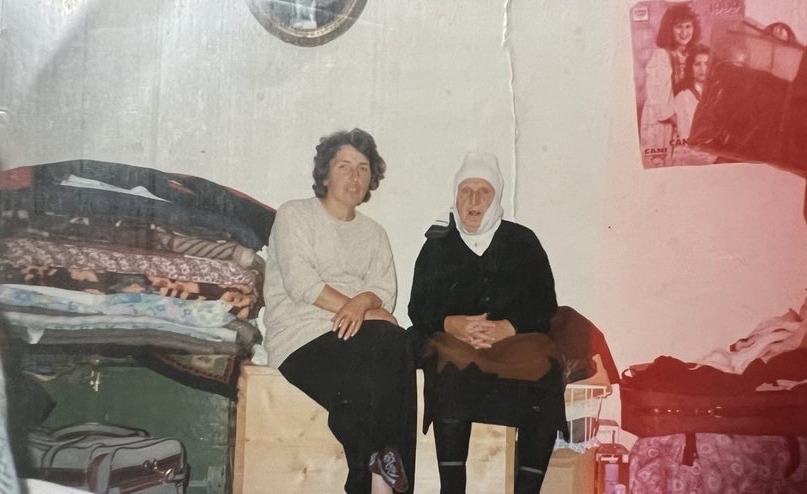
Buqe once lived in a small and quiet house in Deçan with her family. She said the house had narrow walls and a roof that kept in the warmth in winter. She recalled everything changing the following year with leaving home and hiding in neighbors’ basements becoming a routine.
“A knock on the door meant everything – she remembered.”
“That day, the knock came loud and fast.”
“Ikni!” the neighbors shouted. “Se jon ra deri poshtë policia—tash ju hinë nëpër shpija.”
“They were coming. House by house. The Serb paramilitaries.”
There wasn’t time to think. Buqe slipped on shoes—no, not even shoes, house slippers—and fled. Her house was in the first row of houses in the neighborhood. They knew what that meant. They were first in line.
The neighbor’s basement was dark and filled with the usual families. For two hours nobody moved. Then a whisper came down the stairs: “Run. They’re coming for this house next.”
So, they ran. Thirty-five people ran in the rain, with no direction. The mud clinging to their feet. They knew the paramilitary police had snipers, so no one looked behind. No one dared.
Buqe’s feet were soaking wet in her slippers. She was scared. And cold. And wanted to cry. But there was no time to cry. No time to be a child.
“We’re going to Baran, te dajtë,” her mother said, voice shaking. “To my uncles. To someone. To anyone.”
Most of the people didn’t know the road. But her mother did. That was enough. Others joined them. People who knew what it meant when neighbors vanished took these refugees in their tractors. No questions. They were picking up everyone who ran. They knew we had all fled Deçan.
By the time the NATO bombings began on March 24, 1999, Buqe and her family were already among 150 people crammed together, leaving behind what could never be returned to. The only direction was away. And that had to be enough.


 Zëri i Grave